Through the study of the first unit, I have made the following observations. In my past academic experience, I have never been exposed to 2D animation, so this is a new field for me, but one I am curious about. In my undergraduate studies, I focused on 3D animation, particularly using Maya for animation. I find some similarities between 3D and 2D animation.
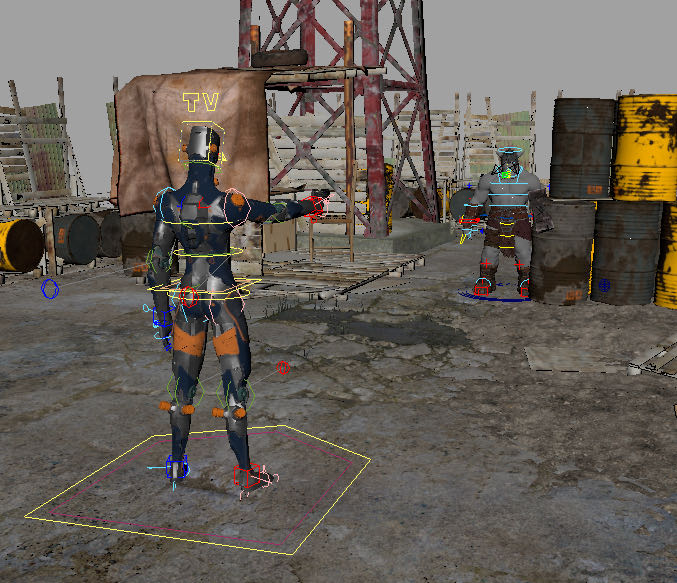
In Maya, I believe timing is a fundamental element of animation. The speed of object movement affects whether the animation appears reasonable and smooth. Motion arcs are also crucial factors; in real life, almost all movements follow arcs. When animators create animations, they should make movements follow curves rather than linear straight lines. Rarely does a character or a part of a character’s body move in a linear straight line. For example, this semester when I was animating a character walking, I found that the curves of the character’s joint movements were similar to the curves in Maya’s character curves. Finding similarities between two different forms of animation has made my learning process much easier.
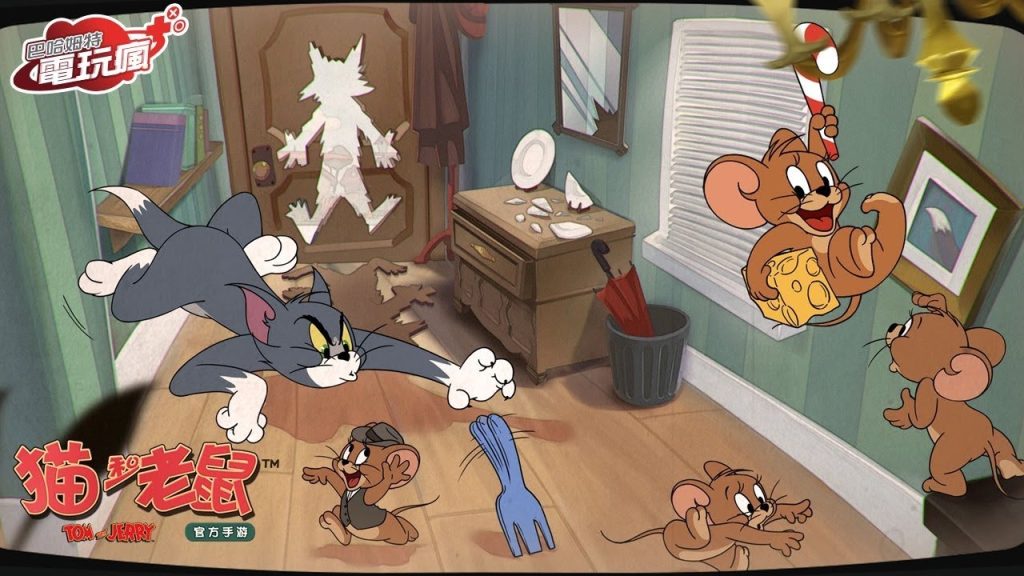
In addition to the above, I have learned that character actions generally consist of three stages: the preparation stage, the execution stage, and the follow-through stage. The first stage is typically used to guide the audience’s attention towards the upcoming action. Therefore, a long preparatory action implies that the subsequent action will be very fast. I have carefully observed cartoons like “Tom and Jerry,” where Tom cautiously tries to catch Jerry; he hides behind an object and then suddenly attacks Jerry when the opportunity arises. In some animations, characters first show a preparing-to-run posture, then swiftly disappear. Sometimes, the preparatory action is based on the laws of physics, as demonstrated in pushing and pulling animations, where the character must first bend their arm backward to gain enough potential energy before pushing heavy objects, which is known as anticipation. This backward movement is the preparatory action, and pushing the object after making contact with it is the actual action.
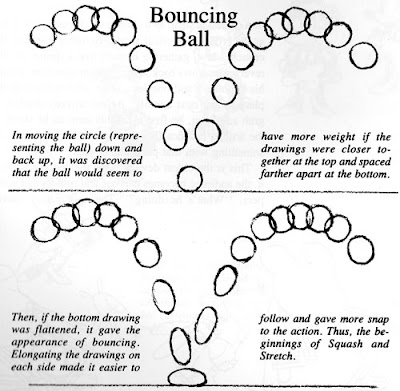
In a bouncing ball animation, I realized that squash and stretch, deforming the ball, are crucial. Squash and stretch are used to depict an object’s elasticity. When a rubber ball bounces and hits the ground, its body is flattened. This is an example of squash. When the ball bounces back up, it stretches and deforms in the direction of its bounce. Initially, I didn’t pay attention to this aspect when animating, so my animation didn’t look lively.
Through research, I found that adding some secondary actions in slightly more complex animations is also essential. Secondary actions are used to increase the animation’s interest and enrich the details of the action. They need to be controlled properly, noticeable but not overshadowing the primary action. For instance, when a character is pondering something difficult, if they rub their chin or sigh, the whole animation will appear more vivid.
These are the various insights I have gained from the knowledge acquired during the first semester of study. However, I believe there are still some shortcomings, and I will gradually learn and comprehend more in my future studies.
Tianyu Wei